
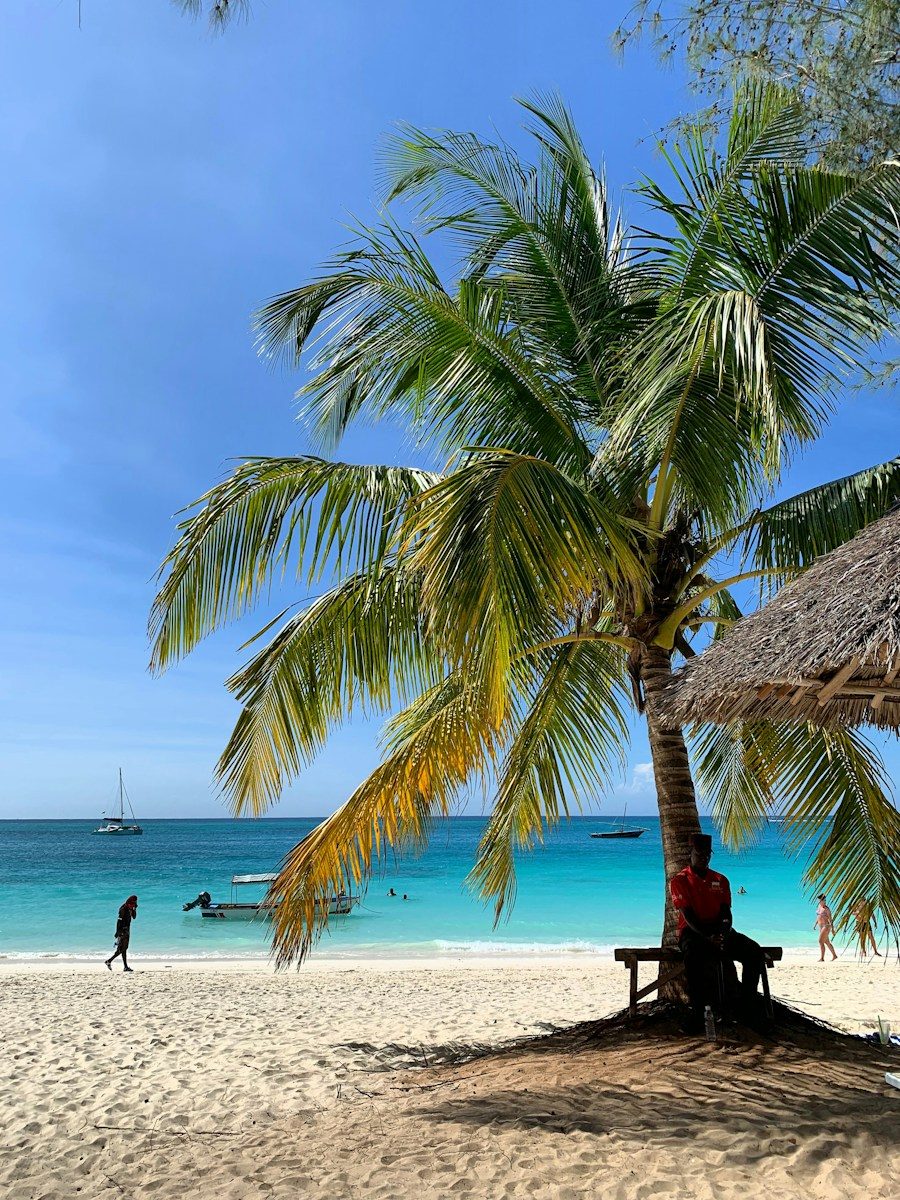
Zanzibar is a semi-autonomous archipelago in the Indian Ocean, lying about 25–50 kilometres off the coast of mainland Tanzania. It consists of the main island of Unguja (commonly called Zanzibar Island), the greener and quieter Pemba Island to the north, and numerous smaller islets and coral reefs. Famous for its white-sand beaches, turquoise waters, spice plantations, and rich Swahili culture, Zanzibar is often called the “Spice Islands.”
For centuries the islands sat at the crossroads of Indian Ocean trade routes linking Africa, Arabia, India, and beyond. Early Bantu settlers were joined by Persian and Arab traders from around the 10th century. The Portuguese briefly controlled the area in the 16th–17th centuries before Omani Arabs took over in 1698. In 1840 Sultan Seyyid Said moved his capital from Muscat to Zanzibar, turning it into a major centre for the clove and (historically) slave trades. Britain established a protectorate in 1890. Zanzibar gained independence in 1963, experienced a revolution in 1964 that overthrew the Arab sultanate, and later the same year united with Tanganyika to form the United Republic of Tanzania.
Today Stone Town, the historic heart of Zanzibar City on Unguja, is a UNESCO World Heritage Site. Tourism, spices, and fishing form the backbone of the modern economy, and the islands remain one of East Africa’s most popular beach and cultural destinations.
Best Time to Visit Zanzibar
Zanzibar enjoys a tropical climate with two main dry seasons and two rainy periods.
Long dry season (June to October) is widely regarded as the best overall time to visit. Days are sunny and relatively cool (typically 25–30°C), humidity is lower, seas are calm, and underwater visibility is excellent for diving and snorkelling. This period coincides with peak safari season on the mainland, making it ideal for combined trips. It is also high season, so expect more visitors and higher prices, especially in July–August.
Short dry season (December to February) brings hotter, stiller weather and excellent beach conditions. Water temperatures are warm and swimming is superb. Christmas and New Year are particularly busy.
Rainy seasons: The long rains (April–May) are the wettest and quietest months; some resorts reduce operations and prices drop significantly. The short rains (November) are lighter and still usable for travel, often with afternoon showers.
Recommendation: June–October for the most reliable beach weather, calm seas, and diving. December–February for hot, sunny beach holidays. Shoulder months (June, September–October, or post-short rains in late November–early December) offer a good balance of weather, fewer crowds, and better value.
Islands & Tourist Attractions
Stone Town (Unguja)
Stone Town (Unguja) is the cultural and historic heart of Zanzibar. This UNESCO World Heritage Site is a labyrinth of narrow coral-stone alleys, intricately carved wooden doors, bustling bazaars, mosques, and former palaces. Key sights include the Old Fort, House of Wonders, Forodhani Gardens (especially lively at sunset with street-food stalls), the former slave market site (now marked by the Anglican Cathedral), Darajani Market, and the waterfront. Wandering on foot is the best way to experience its unique blend of African, Arab, Indian, and European influences.
Northern beaches
Nungwi and Kendwa offer some of Zanzibar’s finest stretches of white sand and the most reliable swimming, as tidal ranges are less extreme than on the east coast. These areas feature lively resorts, beach bars, spectacular sunsets, and easy access to water sports. Kendwa is slightly quieter than the more developed Nungwi tip.
East-coast beaches
(Paje, Jambiani, Bwejuu, and further north toward Matemwe) are quieter and known for long sandy stretches, kitesurfing (especially around Paje), and a more relaxed atmosphere. Tides are more pronounced here, so swimming is best at high tide; low tide reveals extensive sandbanks and tidal pools.
Mnemba Atoll
Mnemba Atoll and marine activities provide world-class snorkelling and diving on vibrant coral reefs. Day trips by boat from the northeast coast are popular. Dolphin watching is possible around Kizimkazi in the south, while traditional dhow sunset cruises are a classic way to experience the Indian Ocean.
Pemba Island
Pemba Island, the second-largest island in the archipelago, is greener, hillier, and far less developed than Unguja. It appeals to travellers seeking quieter beaches, excellent diving, clove plantations, and a more authentic, off-the-beaten-path atmosphere.
Why Visit Zanzibar
Zanzibar is the perfect complement to a mainland Tanzania safari or a standalone tropical escape. It combines pristine beaches and warm turquoise waters with a fascinating historical and cultural depth that few Indian Ocean destinations match. The mix of Stone Town’s atmospheric alleys, aromatic spice farms, diverse coastlines, and excellent marine life creates a multi-layered experience.
How many days do I need?
Three to five nights is ideal for a balanced visit (Stone Town plus beaches). A week allows deeper exploration of different coasts or a side trip to Pemba.
Is Zanzibar only about beaches?
No. While the beaches are outstanding, Stone Town, spice tours, marine activities, and cultural experiences give the islands real substance and variety.
Can I combine it with a safari?
Yes—very easily. Many itineraries pair northern Tanzania parks (Serengeti, Ngorongoro, Tarangire, Lake Manyara) with a few days or a week on Zanzibar. Flights from Arusha or other mainland airports to Zanzibar are short and frequent.
Which part of the island is best?
It depends on your priorities: north (Nungwi/Kendwa) for reliable swimming and lively atmosphere; east for quieter beaches and kitesurfing; Stone Town for culture and history; Pemba for remoteness and diving.
Is it suitable year-round?
Yes, though April–May brings the heaviest rains. The dry seasons offer the most consistent beach and water conditions.
Zanzibar delivers a classic Indian Ocean island experience enriched by centuries of Swahili, Arab, and African heritage ideal for relaxation, culture, and adventure after the wildlife of the mainland.