
Lake Manyara National Park sits at the base of the dramatic Great Rift Valley escarpment in northern Tanzania, between Arusha and the Ngorongoro Highlands. The park covers roughly 325–650 km² (sources vary with lake levels), of which a large portion is the shallow, alkaline Lake Manyara itself. A narrow strip of land between the towering 600-metre escarpment and the soda lake packs an extraordinary variety of habitats into a compact area: groundwater forest, acacia woodland, open floodplains, and lakeshore.
The name “Manyara” is widely linked to the Maasai word emanyara (a spiky euphorbia used for living hedges around homesteads) or possibly a local term referring to a watering place. The area has long been used by pastoralist communities, especially the Maasai. European explorers and hunters knew the region in the early 20th century; Ernest Hemingway famously praised its beauty. It was declared a game reserve in 1957 and gazetted as a national park in 1960. In 1981 it became part of a UNESCO Man and the Biosphere Reserve. The park forms a key stop on Tanzania’s northern safari circuit and is renowned for its tree-climbing lions, dense elephant populations, and spectacular birdlife, particularly flamingos.
Best Time to Visit Lake Manyara
Dry season (June to October) offers the best classic game viewing. Vegetation thins, animals concentrate around the lake, springs, and permanent water sources, and spotting is easier. Tree-climbing lions are often more visible during the heat of the day as they seek shade and cooler air in the trees. Skies are clear and roads are reliable. This is peak season, so the northern sections can be busier.
Wet/green season (November to May) transforms the park into a lush, green landscape with cascading waterfalls on the escarpment after heavy rains. Birdwatching peaks, with migratory species and large flamingo flocks on the rising lake. Wildlife is more dispersed, and March–April can bring heavy rain and muddy tracks. Rates are often lower and crowds thinner.
Recommendation: June–October for reliable wildlife sightings (including the best chances of tree-climbing lions) and dry conditions. November–February or the shoulder months work well for birding, scenery, and fewer vehicles. A half-day or full-day visit fits easily into most northern-circuit itineraries.
Wildlife in Tarangire National Park
The Black Rhino
Black rhinos are a major highlight. The crater is one of the best places in Tanzania to see these critically endangered animals. A small but significant population lives on the floor, and sightings, while never guaranteed, are more consistent here than in most other parks.
African Elephant
Elephants occur in high densities for a park of this size. Herds move through the groundwater forest and along the lakeshore; they are generally relaxed around vehicles and offer close, intimate encounters.
African Buffalo
Cape buffalo form large, impressive herds that graze across the open plains. They are among the most abundant large mammals and provide classic safari scenes as they move in groups toward water.
Birdlife
Birds are a major highlight, with more than 400 species recorded. When water levels and conditions are right, vast flocks of flamingos turn the shallow alkaline lake pink—sometimes numbering in the hundreds of thousands. Other waterbirds include pelicans, storks, spoonbills, herons, cormorants, and grey crowned cranes. The forest and woodland support hornbills, turacos, and many raptors. The park is excellent for both casual and dedicated birdwatchers, especially in the wetter months.
African Lion
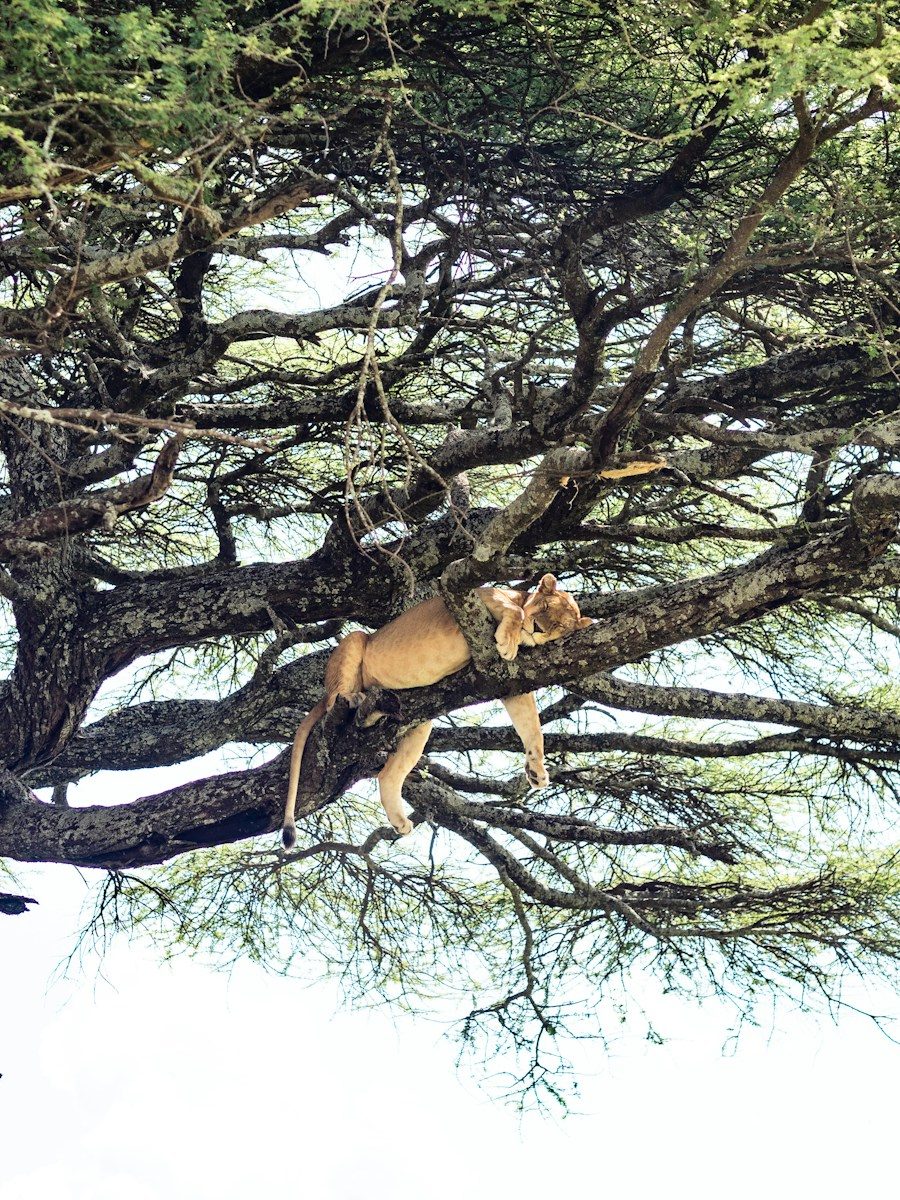
Tree-climbing lions are the park’s signature attraction and one of the main reasons visitors come. Unlike most lions that rest on the ground, Manyara’s prides regularly climb into the broad branches of acacia, fig, and sausage trees, draping themselves along the limbs during the heat of the day. Theories for this behaviour include escaping biting tsetse flies, catching cooler breezes, gaining a better vantage point, or simply a learned tradition passed down within local prides. Sightings are not guaranteed the lion population is relatively small and animals range widely but when they occur, watching a lion lounging high in a tree is a memorable and distinctive experience found in only a few places in Africa.
Why Visit Lake Manyara
Lake Manyara packs remarkable diversity into a compact, scenic setting beneath the Rift Valley escarpment. It is ideal as a half- or full-day stop between Arusha/Tarangire and Ngorongoro/Serengeti, or as a short overnight destination. The combination of tree-climbing lions, close elephant encounters, massive baboon troops, flamingo spectacles, and dramatic scenery makes it more than just a transit park.
Are the tree-climbing lions guaranteed?
No. They are a genuine highlight when seen, but sightings depend on luck, time of day, and the lions’ movements. Mid-morning to afternoon in the dry season often offers the best chances as they seek shade in the trees.
How long should I spend there?
A half-day or full-day game drive is sufficient for most visitors. Overnight stays allow for quieter early-morning and late-afternoon drives and a more relaxed pace.
Is the Big Five present?
Lion, elephant, buffalo, and leopard occur. Rhinos are not a realistic expectation in the modern park.
What else can I experience?
In addition to game drives, activities can include canoeing or boat trips on the lake (when water levels allow), walking safaris in designated areas, cultural visits to nearby Mto wa Mbu, and birdwatching. The groundwater forest, hot springs, and views of the escarpment add scenic variety.
Is it worth including on a northern-circuit safari?
Yes. Its unique tree-climbing lions, high elephant density, birdlife, and convenient location make it a rewarding and distinctive addition that complements the larger parks.
Lake Manyara offers an intimate, varied safari experience defined by its famous tree-climbing lions, rich birdlife, and the striking meeting of forest, lake, and Rift Valley walls.