
Introduction & Brief History
Serengeti National Park in northern Tanzania is one of the world’s most iconic wildlife destinations and Tanzania’s oldest national park. Covering approximately 14,750 square kilometres of vast open plains, acacia woodlands, riverine forests, and rocky outcrops known as kopjes, it forms the heart of the greater Serengeti-Mara ecosystem that stretches into Kenya’s Maasai Mara. The name “Serengeti” comes from the Maasai word Siringet, meaning “endless plains” or “the place where the land stretches forever.”
The park is world-famous for the Great Migration the largest terrestrial mammal migration on Earth involving over 1.5 million wildebeest, hundreds of thousands of zebras, and gazelles that circle the ecosystem in search of fresh grass and water. It is also home to exceptional populations of predators and all members of the Big Five. Designated a UNESCO World Heritage Site in 1981, the Serengeti is recognised for its outstanding natural beauty and biodiversity.
The Maasai people lived and grazed cattle on these plains for more than 200 years before European explorers arrived. Austrian explorer Oscar Baumann was among the first Europeans to document the area in 1892. In the early 20th century the region attracted sport hunters, leading to declining wildlife numbers especially lions. British colonial authorities established a partial game reserve in 1921. Hunting was banned by 1937, and the area gained stronger protection in 1940. Serengeti National Park was officially established in 1951 (initially including what is now the Ngorongoro Conservation Area). In 1959 the Ngorongoro highlands were separated to create a multiple-use conservation area for the Maasai, while the park boundaries were extended northward to the Kenyan border. The park gained international fame through the work of Bernhard and Michael Grzimek and their influential book and film Serengeti Shall Not Die.
Today the Serengeti remains one of Africa’s premier safari destinations, offering year-round wildlife viewing and the unforgettable spectacle of the Great Migration.
Best Time to Visit Serengeti National Park
Wildlife viewing in the Serengeti is excellent throughout the year, but the experience varies dramatically depending on the location of the Great Migration and the seasons.
Dry season (June to October) is the most popular period for classic safari conditions. Vegetation is sparse, animals concentrate around water sources, and visibility is excellent. This is peak time for the dramatic Mara River crossings in the northern Serengeti (especially July–September) and Grumeti River crossings in the Western Corridor (June–July). Weather is generally clear and pleasant, though mornings can be cool. Crowds and prices are highest during these months.
Calving season (January to March) in the southern Serengeti and Ndutu plains is another outstanding window. Hundreds of thousands of wildebeest calves are born in a short period, attracting high predator activity (lions, cheetahs, hyenas). The landscape is green after the short rains, and there are usually fewer vehicles than during the dry-season peak.
Green/wet season (November to May), particularly April–May, brings lush scenery, excellent birdwatching, and lower rates with fewer visitors. Some roads can become muddy, and certain camps close during the heaviest rains, but resident wildlife remains abundant and the migration is still present in parts of the park.
Recommendation: Choose June–October for river crossings and dry-season game viewing, or January–February for calving and predator action. For value and quieter experiences, consider the shoulder months of June or November. The best time ultimately depends on whether you prioritise the migration’s dramatic moments or a more relaxed, less crowded safari.
Wildlife in Serengeti National Park
African Elephant
African elephants roam widely across the park, with herds commonly encountered in the north, Western Corridor, and central areas. They play an important ecological role by shaping vegetation and creating open spaces.
Leopard
Leopards are present in good numbers, especially along riverine woodlands and in the Seronera Valley. These elusive, solitary cats are often spotted resting in trees during the day, particularly in sausage trees or along the Seronera River.
African Lion
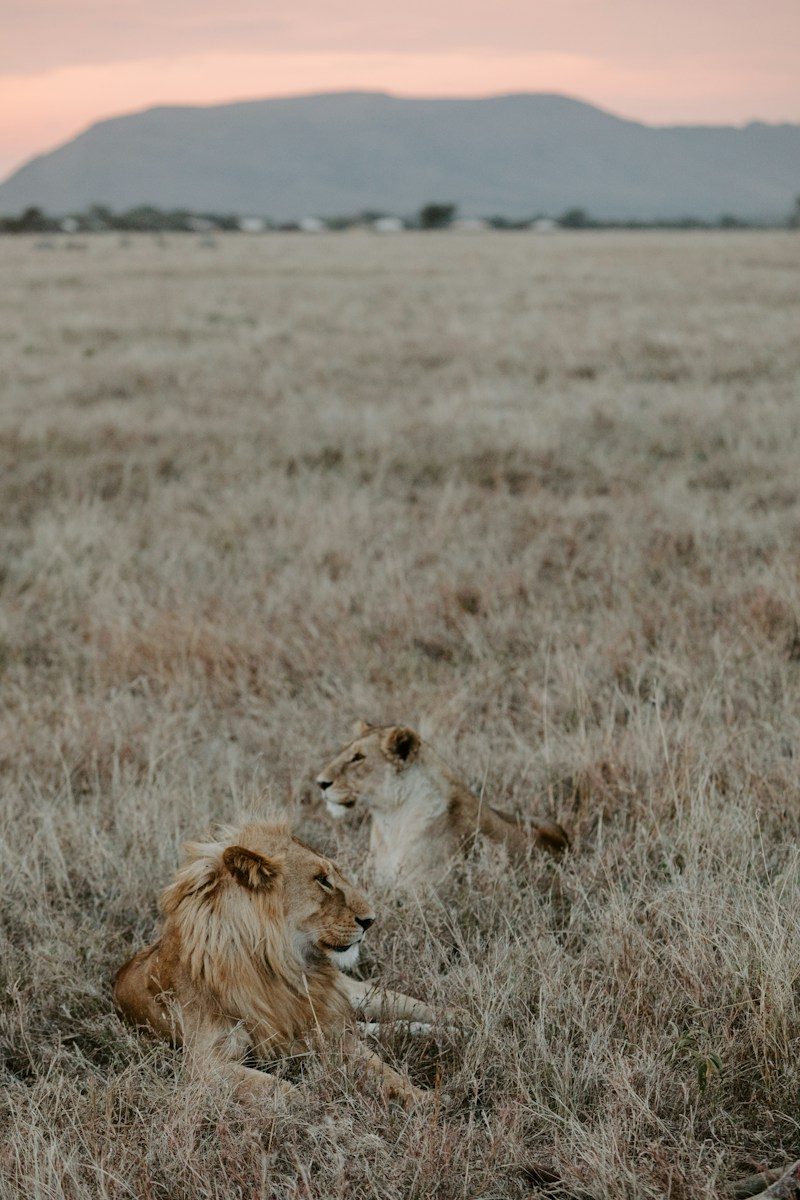
Lions form one of the largest populations in Africa, with estimates of around 3,000 individuals in the broader ecosystem. They are frequently seen in prides across the central Seronera area, on kopjes, and following the migration herds. Serengeti lions are among the most visible and reliably observed big cats in Africa.
African Buffalo
Cape buffalo form large herds that graze the open plains and are regularly seen throughout the park. They are one of the most common members of the Big Five here.
Wildebeests
Wildebeest are the stars of the Great Migration. Over 1.5 million animals move in a continuous cycle through the Serengeti-Mara ecosystem, joined by hundreds of thousands of zebras and Thomson’s gazelles. Watching the herds, river crossings, or calving is one of the greatest wildlife spectacles on the planet.
Wildebeests
Birds number more than 500 species across the varied habitats of the Serengeti. Highlights include ostriches, secretary birds, kori bustards, lilac-breasted rollers, various eagles and vultures, storks, hornbills, and ground hornbills. Endemic or near-endemic species such as the grey-breasted spurfowl and rufous-tailed weaver can also be found. The wet season brings an influx of migratory birds, making the park especially rewarding for birdwatchers.
Why Visit Serengeti
The Serengeti is a must-visit destination because it offers the ultimate African safari experience: vast, unspoiled landscapes, the world’s greatest animal migration, exceptional predator densities, and the chance to see the Big Five in one of the most intact ecosystems on Earth. Few places combine such scale, wildlife abundance, and dramatic natural events in a single destination.
Is the Great Migration always visible?
The migration is a continuous, year-round cycle. You can see large herds in different parts of the park depending on the season—southern plains in the calving months, Western Corridor and north for river crossings, and central areas at other times. Resident wildlife remains excellent even when the main herds are elsewhere.
How long should I stay?
A minimum of 3–4 nights is recommended to explore different regions (central, north, south, or west) and maximise your chances of memorable sightings. Longer stays allow you to follow the migration more closely.
Can I see the Big Five?
Yes. Lions, elephants, buffalo, and leopards are regularly encountered. Black rhinos are present but rarer. Combining the Serengeti with nearby Ngorongoro significantly improves rhino sighting chances.
Is the Serengeti good outside peak migration season?
Absolutely. The park has outstanding year-round resident populations of big cats, elephants, giraffes, and other species. The green season offers lush scenery, fewer crowds, and excellent birding at more affordable rates.
What else can I experience?
Beyond game drives, popular activities include hot-air balloon safaris at sunrise, walking safaris in certain areas, cultural visits to Maasai communities near the park, and sundowners in the bush. The sheer scale of the plains and the sense of wilderness make every visit unique.
Whether you come for the thunder of the migration, the intensity of predator action, or the timeless beauty of the endless plains, the Serengeti delivers one of the most powerful wildlife experiences on the planet.