
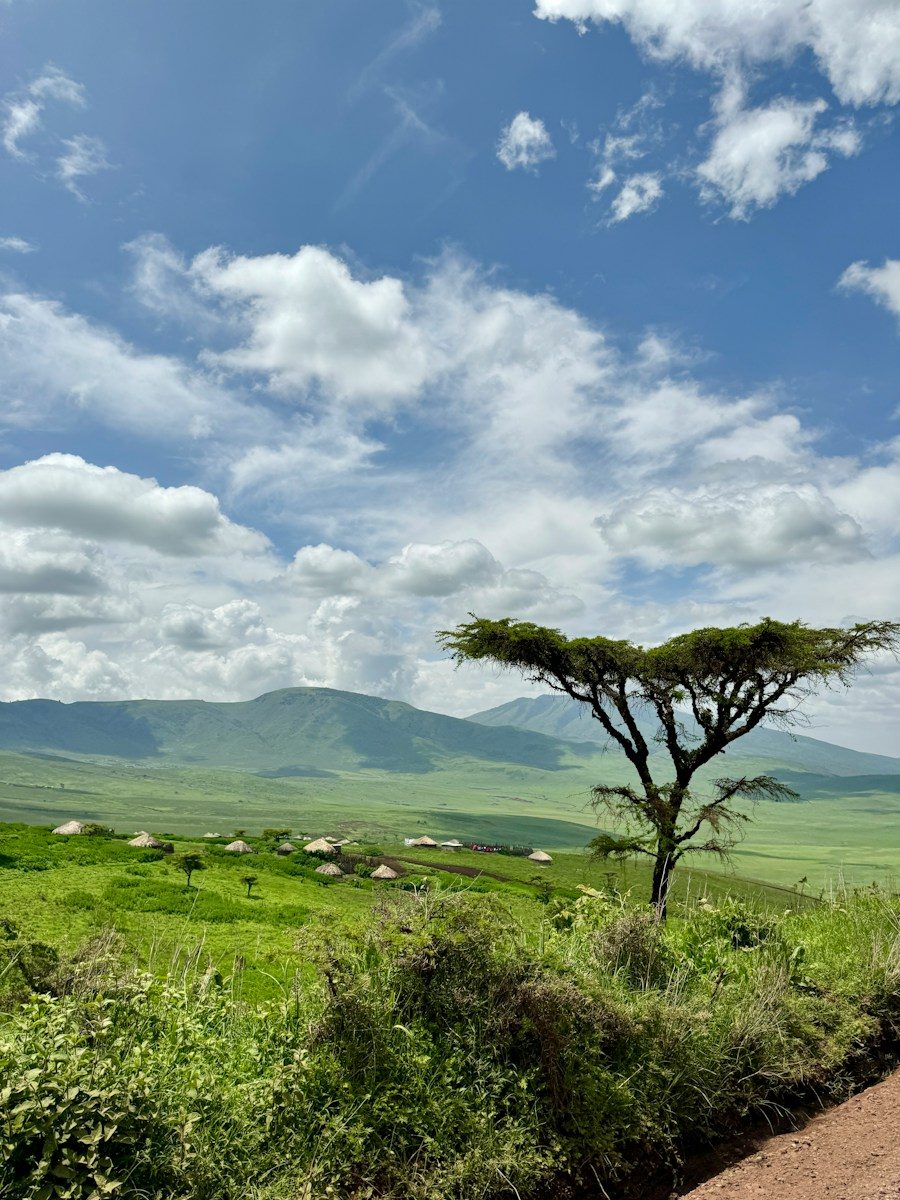
The Ngorongoro Conservation Area in northern Tanzania is one of Africa’s most extraordinary destinations. Covering about 8,292 square kilometres of highland plains, savanna, woodlands, forests, and volcanic landscapes, it forms part of the greater Serengeti ecosystem. At its heart lies the Ngorongoro Crater—the world’s largest intact, unfilled volcanic caldera—roughly 19–20 km wide and 600 metres deep. This natural amphitheatre supports one of the highest concentrations of wildlife on the planet, alongside semi-nomadic Maasai pastoralists who have coexisted with the animals for generations.
Designated a UNESCO World Heritage Site in 1979 (and later recognised as a Cultural Landscape), the area is unique in Tanzania as a multiple-land-use zone that balances wildlife protection with traditional human habitation.
Human presence here stretches back millions of years. Fossil evidence from nearby Olduvai Gorge and Laetoli reveals early hominins, including footprints of Australopithecus afarensis dating back about 3.6 million years. Pastoralist communities, including the Maasai who arrived in the 1800s, have shaped the landscape for centuries. Europeans first recorded the crater in 1892 when Austrian explorer Oscar Baumann visited. In the early 20th century, German settlers farmed parts of the area until World War I. Hunting restrictions began in the 1920s, and the region became part of Serengeti National Park in 1951. In 1959 it was separated to create the Ngorongoro Conservation Area, allowing the Maasai to continue living and grazing livestock while protecting the wildlife.
Today the crater floor alone hosts tens of thousands of large animals in a self-contained ecosystem, making Ngorongoro a highlight of any northern Tanzania safari circuit.
Best Time to Visit Ngorongoro
Wildlife viewing is excellent year round in the Ngorongoro Crater, but conditions vary by season.
The dry season (June to October) is generally considered the best time for most visitors. Short grass and clear skies make animals easier to spot, roads are more reliable, and wildlife concentrates around water sources. Mornings and evenings on the crater rim can be cool, so warm layers are essential. This is peak season, with higher visitor numbers and rates, especially in July and August.
January and February offer another outstanding window. These months feature good weather, excellent predator activity, and the calving season in the surrounding plains (including the Ndutu area), when thousands of wildebeest give birth and predators are highly active.
The green wet season (November to May), particularly the long rains of March–May, transforms the crater into a lush, emerald landscape ideal for photography. There are fewer vehicles, lower accommodation rates, and superb birdwatching. Roads can become muddy, and some areas may be more challenging to access, but game viewing remains strong.
In short: choose June–October for classic dry-season safari conditions, January–February for calving action and clear skies, or the shoulder/green months for quieter, scenic experiences and better value
Wildlife in Tarangire National Park
The Black Rhino
Black rhinos are a major highlight. The crater is one of the best places in Tanzania to see these critically endangered animals. A small but significant population lives on the floor, and sightings, while never guaranteed, are more consistent here than in most other parks.
African Elephant
African elephants, especially large-tusked bulls, roam the crater. Herds are more common in the wider conservation area, but impressive individual males are regularly encountered near the Lerai Forest and other wooded sections.
African Lion
thrive here in high numbers—often estimated at 60–80 individuals on the crater floor—forming one of the densest populations in Africa. Prides are frequently seen hunting or resting in the open grasslands, offering some of the most reliable lion viewing on the continent.
African Buffalo
Cape buffalo form large, impressive herds that graze across the open plains. They are among the most abundant large mammals and provide classic safari scenes as they move in groups toward water.
Birdlife
Birds number over 500 species across the conservation area’s varied habitats. On the crater floor, highlights include large flocks of greater and lesser flamingos that gather at the alkaline Lake Magadi, turning the shores pink. The world’s heaviest flying bird, the kori bustard, strides across the plains, while ostriches, grey crowned cranes, secretary birds, and various storks, egrets, and waterbirds are commonly seen. Grassland specialists, woodland birds in the Lerai Forest, and seasonal migrants (especially during the rains) add further variety, making Ngorongoro excellent for both casual and dedicated birdwatchers.
Why Visit Ngorongoro
Ngorongoro stands out as a must-visit destination for its unique combination of dramatic scenery, exceptional wildlife density, and cultural depth. In a single day on the crater floor you have a realistic chance of seeing the Big Five against the backdrop of towering crater walls an experience few other places can match. The area also protects vital archaeological sites that illuminate human origins and offers authentic encounters with Maasai communities living traditional pastoral lifestyles.
Is the Big Five easy to see?
Lion, buffalo, and elephant are commonly encountered. Black rhino sightings are among the most reliable in Tanzania, while leopards require more luck and patience.
How long should I spend there?
A full day (or at least a long morning/afternoon game drive) is typical and highly rewarding for the crater itself. Adding time for the wider conservation area, Olduvai Gorge, or Maasai cultural visits enhances the experience.
Is it suitable year-round?
Yes. Wildlife remains abundant in all seasons; the main differences are vegetation, weather, crowds, and photography opportunities.